Sunday, July 30, 2006

Why you aren't doing anything about global warming.

There is no doubt we are in an unprecedented predicament with rapid climate change on our doorstep. No scientific doubt:

For example, the Intergovernmental Panel on Climate Change - an international group of hundreds of climate scientists - concluded in 2001 that "there is new and stronger evidence that most of the observed warming observed over the last 50 years is attributable to human activities." :::[ABCNews]

That important consensus was arrived upon in 2001, yet five years later we are bogged even deeper down in the quagmire of fossil fuel dependence, as our economies spew out more greenhousgaseses stressing the atmosphere into a series of worsening positive feedback loops from which, ultimately, there is a point of no return. We are facing the possibility of throwing our earth's natural cycles out of balance and destroying the climate that best sustains us, that we have evolved in, yet emissions reductions from the US and Australia, the world's biggest economy, and one of the biggest coal and gas exporters are further away than ever.

Why?

It's a question that our grandchildren will ask of us so, if only for that reason, it bears thinking about. The reason for business-as-usual in the face of scientific consensus of the harm is that a long and sustained campaign of misinformation about climate science by the fossil fuel companies has been waged for 15 years. It has been designed to confuse the public into accepting their proposition that switching from their product will cause economic disaster; don't risk it for unclear science.

So the Big Lie rides on. How do they get away with it? I believe they play on the public's poor understanding of science, exploiting the potential confusion in meanings between "scientific consensus" and "consensus", for one example. Scientific consensus is the collective judgment, position, and opinion of scientists in a particular field of science at a particular time. This consensus is normally achieved through communication at conferences, the process of publication, and peer review. :::[Wikipedia/scientific consensus]. This is different to common garden consensus, or consensus vulgaris: agreement in the judgment or opinion reached by a group as a whole. :::[dictionary.com]. There is no explicit channel for establishing and communicating consensus implied in this definition, and that is what the PR fossil fuel groups omit when they claim that there indeed are climate scientists who dissent from the consensus. Joe Public hears some climate scientists saying, "look there has been a scientific consensus since 2001", and he sees some fossil fuel shill saying, "look Joe, I'm a scientist, and I dissent from these other scientists on man-made global warming, so logically, how can there be consensus?" The problem is that Joe Public is not responding with, "oh, that's very interesting, what peer-reviewed publication can I read about your research in?" because Joe isn't a scientist.

This gap in understanding is the classic domain the practitioners of oil industry lobby group love to inhabit and they have their exploitation of it down to a black art. One of them, Patrick Michaels, has his hand caught in the coal-industry cooky jar, or at least Colorado's electric cooperative Intermountain Rural Electric Association's: :::[Making Money By Feeding Confusion Over Global Warming]

The letter also says that in February of this year, IREA contributed $100,000 to Patrick Michaels, a professor of environmental sciences at the University of Virginia.

Michaels is one of about a dozen academics who for years have cast doubt on the science surrounding global warming while downplaying the scientifically accepted idea that humans are causing it.

"We have had many apocalypses through the ages that haven't shown up, and this is likely to be another one," Michaels said on CNN earlier this year.


'Michaels said on CNN', note, not in Nature, Science, PNAS or Physical Review Letters. The Professor's audience was not intended to be scientists, but consumers of energy. Also note, it is likely he said it in January. Boy did he have a good February. Took the gap, and scored.

The gap he took, I call this one apocalypso reincarnatis, refers to events like the ozone hole scare where scientists warned that CFCs were eating our ozone layer, increasing concentrations of harmful UV rays. The public remembers the scares of the 80s, and is aware that the problem has norecededed, but is rarely cognisant of the fact that CFCs were banned. Michaels is not saying, 'the reason why we turned around the problem is because we listened to the scientists and modified how we did business'. Truthful and complete disclosure is not worth a quick $100,000 in a good February.

In this case the disgrace is compounded by the fact that the co-operatives customers, 133,000 member-owners, were not told that IREA had given such a substantial sum to Michaels. Nasty, but this sort of practice has been going on for 15 years:

Experts and journalists, however, who have documented a 15-year campaign funded by major companies in the fossil fuel industry to cast doubt on global warming science say the intent is to create confusion.

"This coal industry disinformation campaign is a repeat of a similar campaign launched in the early 1990s by Western Fuels and other coal interests," said Pulitzer Prize-winning journalist and author Ross Gelbspan.


Gelbspan says that continued efforts to confuse the public are "particularly sinister" given that they follow "by almost 10 years the conclusion of more than 2,000 scientists from 100 countries in what is the largest and most rigorously peer-reviewed scientific collaboration in history."

So that is why you aren't doing anything; you have been lied to and are confused. What should Joe Public do? He/she is not a scientist, but she/he is an energy consumer, and has rights; one being the right to not unwittingly buy goods and services that do not occasion harm predictable by the seller, in this case to the consumer's descendants.

The day is fast approaching when energy consumers can't claim ignorance of climate change, much like smokers can't claim ignorance of smoking related diseases today despite the misinformation campaigns of the past by big tobacco. The first species to be extinguished by global warming will be the climate change denialists and global warming skeptics, we can be sure of that. The sooner the better, for the rest of us. And our's. And their's.

And the way Joe Public can bring that day forward faster, whenever they see or read a skeptical scientist like Patrick Michaels, or Richard Lindzen, or Joe Spencer, is to note the media they use and see whether the research they quote is published in a peer-reviewed scientific publication. If this information is missing then the program or article is possibly nothing more than advertorial for fossil fuel and should be judged with that probability in mind. More conscientious consumers can communicate with editors and publishers expressing displeasure at having their intelligence insulted.

Other blogs on:

Saturday, July 29, 2006

Californian heatwave kills 132

Not long ago I read research that indicated that a heatwave in America similar to the one that killed so many Europeans, particularly French, would have similar outcomes in America. I blogged about it. :::[Global warming worse than 9/11 terror attacks]

The research has turned out to be prescient with the death toll from California's record-breaking heat wave reaching 132 on the first day in nearly two weeks that temperatures were expected to stay below 38 degrees Celsius across most of the US state. :::[SMH]

"This is unprecedented for the county," said Stanislaus County Office of Emergency Services spokesman David Jones. The county, home to Modesto, typically sees one heat-related death a year, he said. On Friday, it reported 29.

The Central Valley bore the brunt of the heat wave with temperatures hitting 46 degrees Celsius. At least six Central Valley counties declared local states of emergency that allow farmers to bury livestock killed by the heat in landfills or on their own properties - disposal methods not normally allowed by state water laws.

Forty six degrees Celsius - those poor bastards. I know what 46 degrees Celsius is like; that what the temperature in Sydney hit on New Years day this year, and it is definitely not fun. :::[2006 starts with record temperature high].

Other blogs on: , , ,

Saturday, July 15, 2006

Upcoming USA Climate Change Awards 2006

While it is turning out to the hottest year on record for the United States, 2006 is also turning out to be a re-run of last year for Australia as has been blogged: :::[The Inaugural Aussie Climate Change Awards: 2005]. So many records broken, it was a roaring success yet, eerily, there weren't any winners. Propelled by the irresistible forces of globalisation Global Warming Watch will launch The Inaugural USA Climate Change Awards: 2006 as well as the Second Aussie Climate Change Awards: 2006.

Here is how the US field looks at half-time: :::[ABC News]

The first half of the year was the warmest on record for the United States. Average temperature for the 48 contiguous United States from January through June was 3.4 degrees Fahrenheit (1.9 degrees Celsius) above average for the 20th century at 51.8 degrees Fahrenheit (11 degrees Celsius).

That's a big effort by the oil companies who look like scooping the National Climatic Data Center Award for warmest such period since 1895, which all fans know is when recordkeeping began.

The Most Improved State Award is still anyone's call with Texas as sentimental favourite:

No state was cooler than average and five states Texas, Oklahoma, Kansas, Nebraska, and Missouri experienced record warmth for the period.

The Extreme Weather categories are being lead by the Northeast states in the precipitation sports, Rainfall and Flooding and Snowfall. Moderate-to-Extreme Drought class is heavily contested with 45% of the contiguous US now battling it out for the Best Team Effort Award, an increase of 6 percent over the May campaign.

A smokin' field.

The response from nature has been overwhelming with 50,000 wildfires burning more than 3 million acres keeping officials from the National Interagency Fire Center busy in the record books.

It promises to be an exciting second half with the new hurricane season coming up. Stay tuned.

Other links on: :::[The inaugural Aussie Climate Change Awards: 2005]


Other blogs on:

Friday, July 07, 2006

'Global warming' or 'climate change'?

Seth Godin, a marketing blogger, raises the interesting point that despite the real threat of global warming, no one is taking to the streets in protest. He suggests the reason the consequences have not breached the consciousness of the population is that the term, global warming, has implicit positive connotations:

The muted reaction to our impending disaster comes down to two things:

1. The name.

Global is good.
Warm is good.
Even greenhouses are good places.

How can "global warming" be bad?


He suggests that a different framing like 'atmospheric cancer' or 'pollution death' would be more catchy. Those with a tendency to denial, which to some degree is all of us, may tend to dismiss concern based on the non-threatening name on first impression.

I use the term global warming because that is the dominant search term in the genre. That's what people type in when they are looking for information on the phenomena. While current global warming is the effect of man-made greenhouse gas build up in the atmosphere, its own consequence is rapid climate change. That's the term I would prefer to frame the discussion with. We would be be giving the problem more attention. People at large don't like change, and rapid climate change sounds very unsettling. But my logs show me that the search term climate change appears half the rate of global warming. Hence Global Warming Watch!

If the term global warming is like the long, slow, gradual, initial incline up to the top of a roller coaster then rapid climate change is the Oh-Jesus-stomach-in-the-mouth-drop, the loop-the-loop, and the dives, twists and jinks. We are still on the slow incline, and that is why global warming is more accurate and will be the preferred term for denialists and skeptics to frame the discussion around, but those interested in moving the discussion on should brand it rapid climate change. There is less room for doubt than with global warming, and less room for the public debate which has been undermined by a disinformation campaign mounted by vested interests in cheap fossil fuel energy.

The term has urgency, focuses the mind on averting outcomes and we should use it well before we get to the Oh-Jesus drop. Or we may get ourselves trapped on this rollercoaster ride. Permanently.

Other blogs on:

Tuesday, July 04, 2006

Global warming bloggers heating up.

Technorati Tags posts tagged global warming per day for the last 30 days.

Technorati Chart


Posts that contain Global Warming per day for the last 360 days.

Technorati Chart


Technorati Tags:

Sunday, July 02, 2006

Forty per cent of Europe's landmass is radioactive

That's the ongoing legacy of Chernobyl.

I came across this heart-stopping fact in a SMH article on Dr Helen Caldicott, and it is wonderful that she is still pushing the anti-nuclear message past the age normal people retire. First the article quote - it is not something any thinking person can easily go past: :::[SMH]

"[People] think that it is the answer to global warming," she says, "but in truth it adds to global warming. It does not fix it."

Caldicott's message has always been simple. Nuclear energy leaves a toxic legacy to future generations because it produces not only global warming gases but also massive amounts of toxic carcinogenic radioactive waste. It is also far more expensive than other forms of electricity generation and can trigger proliferation of nuclear weapons.

Even worse, radioactive elements in nuclear-powered countries are already leaking - into the ground, into rivers and oceans, and into the food chain. Already 40 per cent of Europe's landmass is radioactive after Chernobyl, and increasingly so are its food
supplies. Alarmingly that includes human breast milk.


The article suggests that the saying, "you are never a prophet in your own land" applies to Dr Caldicott - she missed out on being listed as one of The Bulletin magazine top 100 influential Australians, yet the Smithsonian Institution named her as one of the 100 most influential women of the 20th century. And she has been nominated for a Nobel Peace prize. I can't speak for the rest of Australia but I certainly hold her in high esteem. I met her when I was not too long out of school in the early eighties because she came to my neighbour's house in Roseville, Sydney to talk about nuclear energy. My neighbour, a geneticist, invited Dr Caldicott to the 'concerned doctors against nuclear' movement she organised. At that stage I was doing some writing and producing for 2NSB, our local community radio station, and so we taped the talk. Then walked the talk; I was that impressed with her, and how she had articulated her message, that I wrote and produced a 30 minute radio program called 'Nuclear Winter' - a depiction of what could happen to Sydney if a nuclear weapon hits its epicenter.

I am grateful to her for raising my awareness.

I note she did it all for the kids - from the weeknight Roseville living room talk for the thirty or so of us, to fronting the crowd of 1 million people who gathered in New York's Central Park to hear her speak, and everything in between.

This is because, as a pediatrician, Caldicott's motivation has always been her children, her children's children and children everywhere. "It's one of the reasons I do the work I do," she says. "I practise global preventative medicine."

Back then I wrote the radio show because I was inspired by her. Now that I am parent myself I understand her motivation, I blog about global warming for my child and for the betterment of his world.

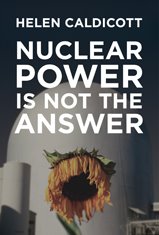
I admit I also do it because I enjoy the writing process. So must Helen though, she has six books to her name. Her latest is sure to be a valuable contribution to the nuclear debate Prime Minister Howard says we should have in Australia.

This month Caldicott publishes her
sixth book - Nuclear Power Is Not The Answer To Global Warming Or Anything Else (Melbourne University Press). It comes as the nuclear energy debate heats up amid increased awareness that Australia has about 40 per cent of the world's recoverable uranium resources.

Caldicott hopes the book will penetrate the political untruth that nuclear energy is a safe, green alternative.

:::[Amazon]:::[Barnes&Noble]


Homework: :::[The nuclear debate in Australia]
More: :::[nuclearpolicy.org]:::[HelenCaldicott.com]


Other blogs on:

Carbon dioxide: early science and prescience.

Early science

The first person to discover carbon dioxide, and indeed to coin the word "gas", was Flemish noble Jan Baptist van Helmont, 1577 to 1644. An alchemist pursuing the Philosopher's Stone he was nevertheless enchanted by the new learning that was producing men like William Harvey, Galileo Galilei, and Francis Bacon. He was a keen experimenter and exacting observer, and the first to understand that the air of the atmosphere is composed of distinct gases.

In burning charcoal he perceived that the gas emitted, which he called "gas Sylvestre", was the same as that produced by fermentation, and that which sometimes makes the air of caves impossible to breath. "Gas Sylvestre" translates to "gas of wood" and may or may not have been related to the Alchemical Tree.

Over the years carbon dioxide (co2) has been known as gas Sylvestre, gas of Van Helmont, Spiritus Sylvestris, gas of Dr Black, aerial acid, atmospheric acid, Mephitic acid, cretaceous acid, acid of charcoal, fixed air (Priestley's term in the 1700s), Hale's solid air, and acidulated air. Most recently it has became known as "life" itself. :::[Carbon dioxide: We call it Life]

Despite being a faithful Catholic he was persecuted by the Church for his publications that took the mystery out of 'miracles'. From 1633 to 1636 he was arrested and could not publish further until 1642.


Prescience

It is little know that Rudolph Diesel invented the diesel engine to run on plant oils, like peanut oil, and not petroleum diesel.

"The use of vegetable oils for engine fuels may seem insignificant today. But such oils may become in course of time as important as petroleum and the coal tar products of the present time."

OK, so it has not happened just quite yet, but my money is still on his prescience bearing out. If it were to happen on the 100 year anniversary of the statement, not only would there be pleasant side-effects like energy independence and climate change amelioration, it would also have an appealing symmetry. Even poetic justice; Rudolph Diesel was killed in some commercial intrigue while crossing the English Channel and petroleum diesel won out.

Other blogs on:

Wednesday, June 28, 2006

Washington deluge 'predicted' as first sign of global warming

In an eery coincidence Kim Stanley Robinson, a science-fiction writer predicts in 2003 that a sustained Washington downpour will be the first sign of artificially global climate change. Via :::[Carbon Planet]

...sometime in the near future, a gigantic moisture-thick "stalled front" hangs over Washington for many days. Downpours come continuously, and eventually the city floods. Robinson, who is well-versed in science literature and whose fiction is often praised in technical publications, felt that sustained downpours, not melting ice, would be the first harbinger of artificially induced climate change. And a sustained downpour - worst than the Great Storm of 1871, previously the city's worst-ever - is ongoing in Washington at this writing.
The novel he predicted it in is called Forty Signs of Rain.

Other posts about the Washington deluge:
Other blogs on:

Canadian climate denial sponsored by ExxonMobil

One of the scientists lending his credential to the badly misnamed 'Friends of Science' (friendsofscience.org) is Tim Patterson. Friends of Science is an organisation heavily engaged in global warming denial and one of the 'friends', Tim Patterson, turns out to work closely with the ExxonMobil via Tech Central Science Foundation. To find out more plug his name into the Exxon Secrets database. :::[ExxonSecrets.org].

I have a suggestion for these sorts of pseudo scientific organisations whose only real reason for being seems to be to cover big fossil fuel's polluting agenda; if they have any specific scientific proof that mankind is not causing global warming, then let them publish it in peer reviewed scientific journals. Throw their ideas into the ring and let them slog it out in a Darwinian struggle. If they survive the mauling by our best and brightest, then the public can at least have confidence in the veracity of 'scientific' claims that mankind is not responsible for global warming. Otherwise, it is simply confusing the message in public, and this is irresponsible and cowardly.

Other blogs on:

Tuesday, June 27, 2006

Could US energy politics go Category Five?

At some point time in time, most likely soon, you are going to see something happen that will be big enough to snap the ordinary American right out of their climate change complacency.

It may not just be one big event, it could be a confluence of a number of different events. Perhaps a harbinger of this is when journalists start to regularly use extreme weather metaphors to describe politics and industry. Raymond Learsy of the Huffington Post believes he sees a perfect storm brewing over energy.
:::[A Perfect Storm Is Developing Around Energy Policy: Friedman On TV, Gore In Our Gut]

The speculation about Gore's political ambitions are flying fast and furious. But regardless of whether Gore decides to run again, I sense that something akin to the perfect storm is developing on the issue of energy policy. With $3-a-gallon (and rising) gasoline, an emerging consensus that global warming is real, and a growing sense that Big Oil's hand-in-glove relationship with the administration and Congress harms the average American citizen, Al Gore's return to the public stage may be the critical spark that finally lights a fire under the American electorate.

And yesterday Bill Blakemore of ABCNews announced he also believes he detects a perfect storm in the making. It seems an elm tree has been uprooted and has fallen across the driveway of the White house by a literal storm, and this has served to focus the so called "debate" on global warming. :::[A Perfect Storm Descends Upon The Nations Capital]

June 26, 2006: A perfect storm of drenching rain, irony, political rancor, public fear and - at the last minute like a fierce stroke of lightning - word from the highest court in the land, descended on the nation's capital today.

This storm - pulling in many parts of the global warming emergency - also broke through the White House perimeters and helped bring down a century-old elm tree, laying it across the driveway.

It seems even Mother Nature is not adverse to using the odd bitingly ironic metaphor to make her point. Denying access to and from the White House by use of an uprooted elm (possibly planted by a significant American in the good old days of 'for the people, by the people') until the U.S. Supreme Court announces that it will indeed hear the case brought against the U.S. Environmental Protection Agency on the grounds that it should have regulated carbon dioxide emissions in order to combat global warming.

How poetic and pithy a protest is that?

Not quite as poetic as the license George W Bush takes with the truth when he holds that there is a scientific global warming debate on whether global warming is man-made or natural. In what is a departure from the way US media generally cover global warming and politics, Blakemore takes the President to task for propagating propaganda:

"I have said consistently," answered Bush, "that global warming is a serious problem. There's a debate over whether it's manmade or naturally caused. We ought to get beyond that debate and start implementing the technologies necessary...… to be good stewards of the environment, become less dependent on foreign sources of oil"

The President - as far as the extensive and repeated researches of this and many other professional journalists, as well as all scientists credible on this subject, can find - is wrong on one crucial and no doubt explosive issue. When he said -— as he also did a few weeks ago - that "There's a debate over whether it's manmade or naturally caused" - well, there really is no such debate.

At least none above what is proverbially called "the flat earth society" level.

Not one scientist of any credibility on this subject has presented any evidence for some years now that counters the massive and repeated evidence - gathered over decades and come at in dozens of ways by all kinds of professional scientists around the world - that the burning of fossil fuels is raising the world's average temperature.

Or that counters the findings that the burning of these fuels is doing so in a way that is very dangerous for mankind, that will almost certainly bring increasingly devastating effects in the coming decades.


I grew up in a county subject to big thunder storms, every summer day at 3:00pm for 15 minutes the rapidly darkened heavens would open up on an otherwise sunny sky. On occasion one got a sense during the build up of the storm that it was going to be a much bigger one than usual. You could smell the electricity in the air, taste it in your mouth (tastes like blood), and feel the beginnings of a tingle on the back of your neck. And you just knew you were in for one serious doozy.

That's kind of how it feels now, but on a global dimension.

Other blogs on:

Sunday, June 25, 2006

Ski slope has global warming covered.

Two and a half thousand square metres of the Andermatt Swiss ski resort, next to the Gurschen glacier in central Switzerland was wrapped with white reflective sheeting to protect it from global warming in May: :::[CBC Canada]

Nearly 4 mm thick, the cover is made from synthetic fibres that protect the snow from ultraviolet radiation.

It was laid out on Tuesday by employees of Andermatt Gotthard Sportbahnen, the company that operates ski lifts at the resort.

The company said it took the step because employees had watched the glacier recede 20 metres from one of its lift stations in only 15 years.


Global Warming Watch are not in it to say we told you so, but our prescience is spooky: :::[Day after tomorrow? It's a wrap.]

Other blogs on:

Cowards corner: where science and politics converge

On a bloggers conference call this afternoon, Faiz of Think Progress asked Al Gore for a response to the claims by global warming skeptics denying the clear link between global warming and man-made greenhouse gas clearly established by the US National Academy of Sciences report on global warming: :::[Think Progress]

"human activities are responsible for much of the recent warming."

National Research Council
National Academy of Sciences
One skeptic in question was the Electrcity Daily. The sparkies rag claimed the NAS report cast "serious doubts on the conventional scientific wisdom of man-made climate warming" and that "Those who argue that solar activity drives global climate, not CO2, will take heart." The Electricy Daily readership must be invested in coal, right up to their eyeballs. A swipe was also taken at Al Gore. His documentary, "An Inconvenient Truth" must be biting.

He provided an insight into what happens when science becomes politicised:

He said that global warming skeptics "will seize on anything to say up is down and black is white." Gore explained that science, by nature, thrives on uncertainty and tries to eliminate it; politics, on the other hand, is vulnerable to being paralyzed by uncertainty. When science and politics converge, Gore argued, the chance for "cowardice is high."

Cut though? Yes. Charged? Definately. Contoversial? Surely. But is he giving us a perspicacious grasp, or was he proffering a mere media grab? Is it cowardice for a politician to uphold a lie on behalf of special interest constituents at the expense of the greater community? Gore may have had the other skeptic Faiz referrs to, Sen. James Inhofe (R-OK), in his sights on that one. Inhofe claimed that, "Today's NAS report reaffirms what I have been saying all along, that Mann's 'hockey stick' is broken."

That is not the way the BBC reports it though: :::[BBC]

The new report, carried out by a panel of the US-based National Research Council (NRC), largely vindicates the researchers' [Michael Mann, Raymond Bradley, and Malcolm Hughes] work, first published in 1998.

I think Gore is right. It is clear cowardice not to tell to the truth, more so for narrow political gain. You shouldn't have to think too deeply about that one, but what is galling is that the rest of us, and those who come after us, will pick up the tab for listening to this sort of gutlessness. The longer we listen, the bigger the tab will be.

Other blogs on:

Friday, June 23, 2006

World map of renewable energy distribution

Want to know what the world will look like post oil and coal? This groovy little flash program shows how far some countries are on their way to renewable energy independance, and also shows the distribution of regions rich in renewable 'natural assets'. Brazil grows 40% of its motor car fuel as sugarcane ethanol. In Iceland, 93% of homes are powered by geothermal electricity. :::[Popular Science]

Other blogs on:

Wednesday, June 21, 2006

Turn global warming off: "You control climate change" campaign

The "Tune in. Turn on. Drop Out" chant of the 60s ain't going to cut it in the mid-noughties era of global warming. Today, in the EU, it is "Turn down. Switch off. Recycle. Walk."

Households directly contribute about 16 percent of the EU's greenhouse gas emissions. Climate change is in direct control of householders, and to illustrate the point for the public.advertisements carrying the globe with a thermostat control are spearheading a
new advertising awareness campaign launched by European Commission President José Manuel Barroso and Environment Commissioner Stavros Dimas in Brussels on 31 May. The slogan is: Turn down. Switch off. Recycle. Walk. You couldn't get a more elegant piece of communication, it's so simple, anyone can turn a dial. But what is more powerful is the empowerment it gives the average punter. If you and I can control up to 16% of greenhouse gas emissions, and offset the rest, we can have a significant control over the impact of climate change on our future. Making things 16% less worse for ourselves is a good thing. It makes it worth doing something about global warming, and it is this point that will allow Joe Punter to come out of understandable global warming denial to take really stock of the situation. And then make a plan. :::[Expatica]

Other blogs on: , , ,

Tuesday, June 20, 2006

Seeds need to survive global warming if we are to.

While the US and Australia continue to contend that there is nothing wrong with global warming that can't be fixed by some future technology, the industrious Norwegians and others are squirreling away nuts. :::[SMH]

ON A Norwegian island 1000 kilometres from the North Pole, a consortium of nations is beginning work on a super-safe repository for "the world's most precious asset": its seeds.

When the chilled vault is completely installed in the permafrost and above the tsunami line some time next year, more than 1 million samples of agricultural seed, from apples to Zinfandel grapes, will be brought to the "seed bank of last resort".


It will be fifty metres long and five metres wide, lined with the hardest of prestressed concrete, and is to be bored into the side of a mountain on the island of Spitsbergen above the village of Longyearbyen. It is vertically high enough to survive sea level rise and tsunami, high enough in lattitude for the temperature to remain insulated from heat for "month, even years" should power fail. Dr Cary Fowler, executive director of the Rome-based Global Crop Diversity Trust, which will manage the repository, said the seeds are, "beyond value, and I don't think anyone can imagine realistic solutions to problems like climate change, water shortage or energy shortage without a system of agriculture that can adapt and change."

Learn more about: :::[Global Crop Diversity Trust]

Other blogs on: